
Dr Sourabh Mukharjee Cancer Care Centre has represented this article for your information to
resolve your query.
Gastrointestinal (GI) malignancies are complex group of cancers affecting the esophagus,
stomach, small intestine, colon, rectum, anus, and various parts of the digestive system.
Colorectal cancer stands out among these, due to its high prevalence and impact on health.
This article delves into the intricacies of gastrointestinal and colorectal malignancies, exploring
their epidemiology, risk factors, diagnostic approaches, and treatment modalities.
Epidemiology:
GI malignancies account for a considerable portion of the global cancer burden. Colorectal
cancer, in particular, is the third most commonly diagnosed cancer and the second leading cause
of cancer-related deaths worldwide. The incidence and mortality rates vary significantly across
different regions, influenced by dietary habits, lifestyle factors, and healthcare access.
In Western countries, colorectal cancer is more prevalent, with lifestyle factors such as high-fat
and low-fiber diets, sedentary lifestyle, and obesity playing crucial roles. Conversely, developing
countries have witnessed a rise in incidence due to rapid urbanization and the adoption of
Westernized lifestyles. Helicobacter pylori infection remains a significant risk factor for gastric
cancer in certain regions, highlighting the geographical variability in GI malignancy prevalence.
Risk Factors:
Risk Factors:
Several risk factors contribute to the development of gastrointestinal and colorectal malignancies.
These can be broadly categorized into genetic, environmental, and lifestyle factors:
Avoiding Risk Factors: Limiting alcohol consumption, avoiding tobacco use, and managing
obesity are vital in reducing cancer risk.
Conclusion:
The count of Gastrointestinal and colorectal malignancies are quite high in Assam and North-East
Region of India. This represent a significant health challenge, necessitating comprehensive
prevention, early detection, and advanced treatment strategies. The interplay of genetic,
environmental, and lifestyle factors underscores the complexity of these diseases.
In Our Centre named Dr Sourabh Mukharjee Cancer Care Centre we offer advances in molecular
biology and personalized medicine which hold promise for improved outcomes and a brighter
future for patients battling these formidable cancers. Through our continued research, public
awareness, and adherence to preventive measures, we are contributing our best to decrease the
burden of gastrointestinal and colorectal malignancies that can be mitigated, leading to healthier
live.
Genetic Factors:
A family history of colorectal cancer or inherited conditions such as Lynch
syndrome and familial adenomatous polyposis (FAP) significantly increase the risk. Genetic
mutations in APC, KRAS, and TP53 genes are commonly associated with colorectal cancer
development.
Environmental and Lifestyle Factors:
Diets high in red and processed meats, low in fruits and
vegetables, and lacking dietary fiber are linked to increased colorectal cancer risk. Obesity,
physical inactivity, smoking, and excessive alcohol consumption also contribute to the likelihood
of developing GI malignancies.
Inflammatory Conditions:
Chronic inflammatory conditions like inflammatory bowel disease
(IBD), including Crohn’s disease and ulcerative colitis, elevate the risk of colorectal cancer.
Infectious Agents: Infection with Helicobacter pylori is a well-known risk factor for gastric
cancer.
Pathophysiology:
Gastrointestinal and colorectal malignancies develop through a series of genetic mutations and
epigenetic alterations leading to uncontrolled cellular proliferation. The adenoma-carcinoma
sequence is a well-established model for colorectal cancer, where benign adenomatous polyps
progressively transform into malignant tumors over several years.
The initial step involves mutations in the APC gene, followed by additional mutations in KRAS and
TP53 genes. These genetic alterations result in dysregulation of cell signaling pathways, leading
to increased cell proliferation, invasion, and metastasis. Epigenetic changes, such as DNA
methylation and histone modifications, further contribute to tumor development and progression.
Diagnosis:

Early diagnosis of gastrointestinal and colorectal malignancies significantly improves prognosis.
Various diagnostic modalities are employed to detect these cancers:
Diagnosis: Regular screening for colorectal cancer is crucial, especially for individuals aged 50
and above or those with a family history of the disease. Methods include fecal occult blood
testing (FOBT), fecal immunochemical testing (FIT), sigmoidoscopy, and colonoscopy.
Colonoscopy remains the gold standard for detecting and removing precancerous polyps.
Imaging:
Imaging techniques, including computed tomography (CT) scans, magnetic resonance imaging (MRI), and positron emission tomography (PET) scans, aid in staging and evaluating the extent of disease spread
Endoscopy:
Upper endoscopy (esophagogastroduodenoscopy) and colonoscopy are essential
for direct visualization and biopsy of suspicious lesions in the GI tract.
Tumor markers like carcinoembryonic antigen (CEA) and carbohydrate antigen
19-9 (CA 19-9) are used to monitor treatment response and detect recurrence, although their
specificity and sensitivity are limited.
Treatment:
The management of gastrointestinal and colorectal malignancies involves a multidisciplinary
approach, encompassing surgery, chemotherapy, radiation therapy, targeted therapy, and
immunotherapy. The choice of treatment depends on the cancer type, stage, and overall health of
the patient.
Surgery:
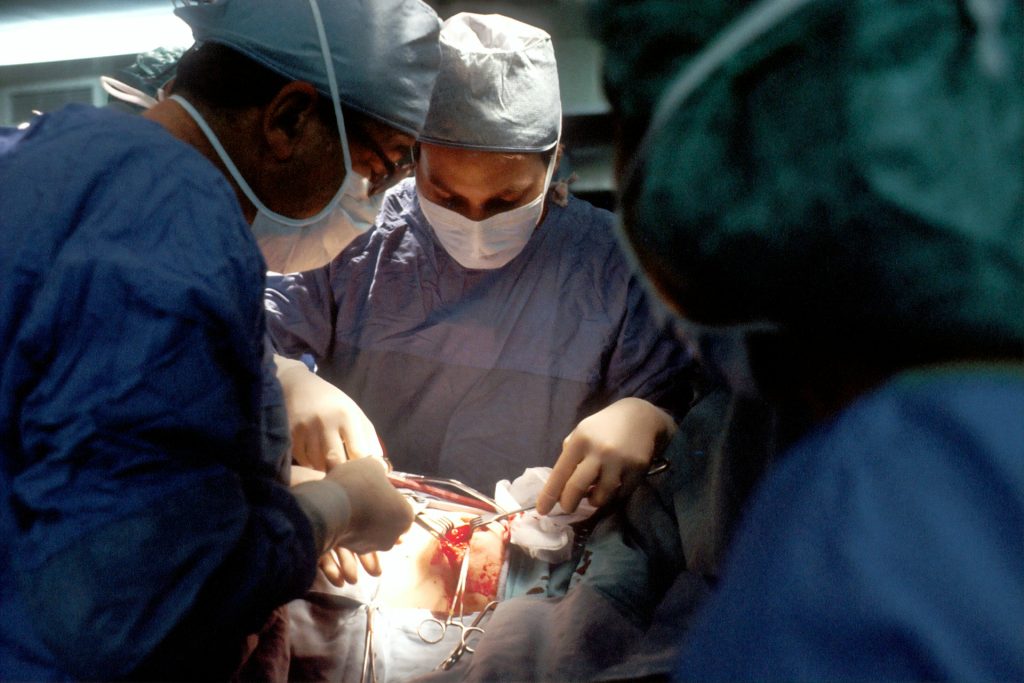
Surgical resection remains the cornerstone of treatment for localized GI and colorectal
cancers. Minimally invasive techniques, such as laparoscopic and robotic-assisted surgeries,
have improved patient outcomes and reduced recovery times. Robotic Esophagectomy and
Robotic Rectal surgeries are rapidly becoming gold standard in the field of oncology.
Chemotherapy:

Chemotherapy is often used in conjunction with surgery for advanced or
metastatic GI cancers. Drugs like 5-fluorouracil (5-FU), oxaliplatin, and irinotecan are commonly
employed in colorectal cancer treatment.
Radiation Therapy:

Radiation therapy is used to shrink tumors before surgery or to manage
symptoms in advanced stages. It is particularly effective for rectal cancer and esophageal
cancers.
Targeted Therapy:
Targeted therapies, such as cetuximab and bevacizumab, have
revolutionized colorectal cancer treatment by specifically targeting cancer cell growth and
angiogenesis pathways.
Immunotherapy:
Immune checkpoint inhibitors like pembrolizumab and nivolumab have shown
promise in treating microsatellite instability-high (MSI-H) colorectal cancers by enhancing the
body’s immune response against cancer cells.
Prognosis and Prevention:

The prognosis of gastrointestinal and colorectal malignancies depends on various factors,
including the cancer stage at diagnosis, molecular characteristics, and the patient’s overall health.
Early-stage cancers have a significantly better prognosis compared to advanced or metastatic
diseases.
Preventive measures play a crucial role in reducing the incidence and mortality of GI
malignancies.
These include:
Regular Screening: Adherence to recommended screening guidelines for colorectal cancer can
lead to early detection and removal of precancerous polyps.
Healthy Lifestyle: Maintaining a balanced diet rich in fruits, vegetables, and fiber, along with
regular physical activity, can lower the risk of GI malignancies.